FAA green lights for eVTOL test flights at Honda
FAA green lights for eVTOL test flights at Honda

After three years of waiting, Honda is getting closer to realizing its dream of a eVTOL aircraft (electric vertical takeoff and landing) for intercity transportation. The Japanese automaker is preparing to fly its first prototype, a breakthrough that could transform the air travel landscape.
A crucial FAA exemption
Although Honda has kept its eVTOL program under wraps, company documents Federal Aviation Administration (FAA) reveal that the US aviation regulator recently granted an exemption to theHonda Research Institute (HRI). This exemption will allow Honda to fly a scaled-down prototype for experimental purposes, marking a significant step in the development of its aircraft.
The exemption letter, dated October 30designates the prototype as an “N241RX scale model test vehicle, electrically powered vertical take-off and landing (VTOL) unmanned aircraft system”, weighing at least 25 kilograms.
Honda eVTOL Technical Specifications
Honda’s previously leaked eVTOL specifications reveal an aircraft equipped with:
- Eight propellers for vertical lift
- Two rear propellers for forward propulsion
- A hybrid propulsion system using a gas turbine generator
Honda predicts that this hybrid-electric aircraft will have a range of 400 kilometerswhich makes it a serious competitor in the urban air transport market.
The role of the Honda Research Institute
L’Honda Research Institute (HRI)based in North America, plays a key role in the development of innovative technologies. Its researchers and engineers tackle complex problems, directly contributing to Honda’s current and future technology roadmap. HRI’s research facilities are located across the United States, with an aerospace engineering division located in San Luis Obispo County, California.
The FAA exemption letter was addressed to Justin Nevittflight test engineer at HRI, who joined the team in 2023 after a seven-year career at Gulfstream. This experience will be valuable in navigating the FAA certification process.
Flight conditions and future prospects
The FAA placed certain restrictions on the prototype’s operations. The flights must take place:
- By day
- Above private or access-controlled property
- In line of sight of the pilot in command
This decision is inspired by a similar exemption granted in 2021 to Kiwi Technologies and Guardian Agriculture for testing an electric crop spraying drone.
Although HRI has not yet announced a timetable for initial flight testing, the FAA exemption will remain in effect until October 31, 2026providing a valuable window for development and testing.
Competition in the urban air mobility market
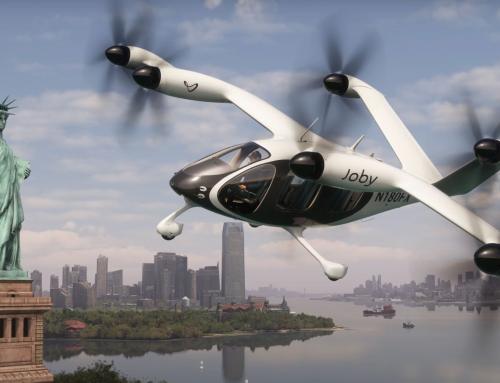
Other automotive giants are also entering the air mobility race. Supernala subsidiary of Hyundai, plans to fly a full-scale demonstrator of its eVTOL air taxi in 2025. For his part, Toyota collaborates with Joby Aviationa California-based eVTOL developer, to produce an aircraft that is expected to be among the first to enter service in the United States.
Honda’s experience in aviation
Although Honda is not the first automaker to produce an eVTOL air taxi, its previous experience in aircraft certification with the HondaJet gives him an advantage. The company says its expertise in the FAA certification process will increase the efficiency of eVTOL development and accelerate its time to market. Additionally, Honda plans to leverage its expertise in lightweight structures and aviation-specific production technologies.
With these developments, Honda positions itself as a key player in the future of air travel, poised to transform intercity mobility.