

With advances in air transportation and the search for greener solutions, the terms VTOL and eVTOL are increasingly being talked about. But what do they mean? And how are these innovative technologies transforming air mobility? Let’s dive into the world of VTOL and eVTOL, their differences, and their perspectives.
Definition and meaning of VTOL
VTOL (Vertical Take-Off and Landing) aircraft are aircraft capable of taking off and landing vertically. This means that they do not need a runway to take off, unlike traditional aircraft. Historically, this technology has been used in specialized fields such as the military with models such as the famous Harrier Jump Jet or the V-22 Osprey, capable of combining helicopter and aircraft capabilities.
How does a VTOL work?
VTOLs use steerable motors or rotors that allow the aircraft to rise vertically before tilting into horizontal flight. They vary in design, but generally fall into two main types:
- Tiltrotor aircraft : Equipped with rotors capable of changing angle, allowing a smooth transition between vertical takeoff and horizontal flight.
- Thrust-vectored aircraft : Use steerable engines that direct airflow vertically for takeoff and then horizontally for cruise flight.
These devices offer increased flexibility, but they are often expensive and complex to design, limiting their use to demanding sectors such as defense.
eVTOL: a new era for urban mobility

The term eVTOL stands for “Electric Vertical Take-Off and Landing”, and as its name suggests, it is a VTOL that runs on electricity. This type of aircraft is now at the heart of urban air mobility (UAM) projects, aiming to offer fast and ecological transport solutions in cities.
Why are eVTOLs so innovative?
eVTOLs bring several major advantages that make them particularly attractive:
- Eco-friendly : Unlike traditional VTOLs, eVTOLs run on electricity, reducing their carbon footprint and environmental impact.
- Quiet : Electric technology is naturally quieter than combustion engines, an asset for integration into urban areas.
- Economical : Ultimately, eVTOLs could reduce operating costs, making air mobility accessible to the general public.
Thanks to these characteristics, eVTOLs are a solution to meet the challenges of large cities, offering alternatives to traffic jams and reducing travel times for users.
Main differences between VTOL and eVTOL
Although VTOLs and eVTOLs share the same vertical takeoff principle, there are some major differences that distinguish them:
- Power source : VTOLs use combustion engines while eVTOLs run on electricity, limiting their environmental impact.
- Use : VTOLs are often reserved for military or industrial applications, while eVTOLs focus on urban mobility solutions.
- Noise : eVTOLs are quieter, an advantage in densely populated areas.
Limitations and challenges of eVTOL
Despite their promise, eVTOLs are still in the development phase. Here are some challenges to overcome:
- Limited autonomy : Current batteries limit their flight time, a challenge for longer trips.
- Strict regulations : Certification of eVTOLs and integration into urban airspace require regulations that are still being developed.
- Infrastructure : The deployment of eVTOLs in urban environments requires the creation of vertiports and suitable landing zones.
Progress in these areas will determine the pace of eVTOL adoption in the coming years.
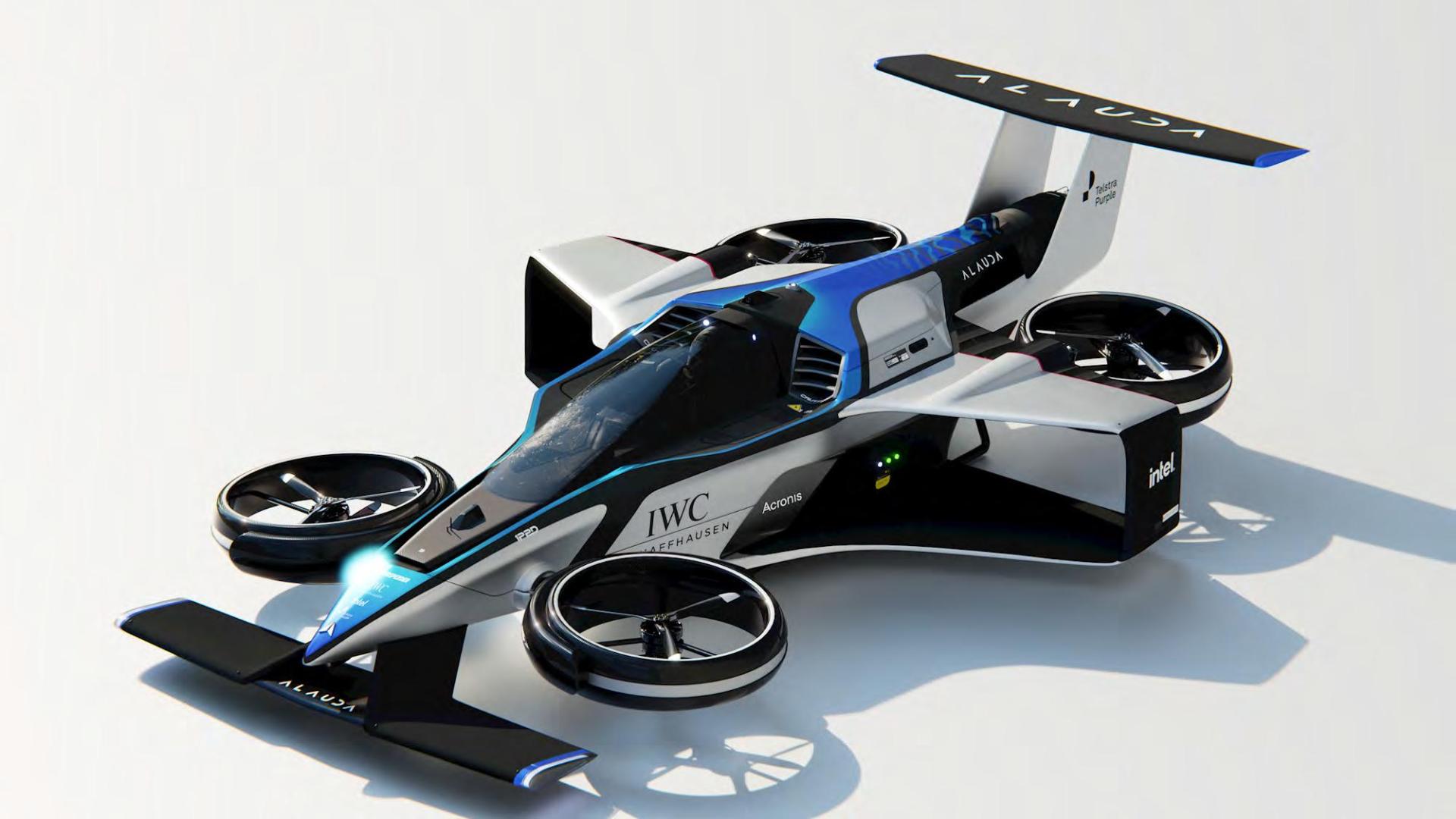
Applications and future prospects for eVTOLs
eVTOLs are being considered for a variety of uses, from passenger transportation to cargo deliveries . Their future could include:
- Short-distance air transport : an alternative to taxis and VTCs in large cities, reducing travel time.
- Express delivery : eVTOLs could transport packages in minutes, revolutionizing the logistics industry.
- Emergency response : used to transport medical equipment or rescue teams quickly to hard-to-reach areas.
Several companies, such as Joby Aviation , Archer Aviation , and Volocopter , are positioning themselves to make these services available by the end of the decade. Cities, for their part, are investing in dedicated infrastructure to accommodate this new form of mobility.
VTOLs and eVTOLs represent a turning point in air mobility, and eVTOLs in particular promise to revolutionize the way we move around cities. While technical and regulatory challenges remain, the potential of this technology is attracting major investments. In the near future, these aircraft could well become part of our daily lives, offering a fast, environmentally friendly, and convenient transportation solution in urban environments.
When will this be available to the general public?

Electric vertical take-off and landing aircraft (eVTOLs) are expected to be available to the general public by the end of this decade, but their introduction will likely happen in phases and in select regions before wider adoption. Here is an estimate of their development and public access timeline, taking into account technological advances, regulations, and current plans from industry companies:
2025-2026: Start of limited commercial services
Some companies such as Joby Aviation, Archer Aviation, and Volocopter plan to launch eVTOL transport services in pilot cities by 2025, particularly for trips between airports and city centers. These first services will likely be reserved for specific customers or will be integrated into urban mobility services tested in partnership with local authorities.
2027-2028: Gradual expansion of services in urban areas
Once initial trials have proven their reliability and safety, eVTOLs could be available in more cities as air taxi-type services. Prices will still be high at this stage, and their use will be limited by specific infrastructure (vertiports) and defined air corridors.
2030 and Beyond: Wider Public Availability
As production increases and the technology becomes more widely available, eVTOL ride prices are expected to decrease, making the service more accessible to the general public in large cities. Integrating eVTOLs into mobility platforms (such as Uber) could help drive adoption, especially in areas with high ground traffic.
Factors influencing their availability
The launch schedule for the general public depends on several factors:
- Aviation regulations: Authorities like EASA in Europe and the FAA in the US have yet to define strict rules for eVTOLs, and this process takes time.
- Urban infrastructure: Vertiports and suitable infrastructure must be installed in urban areas to enable safe take-offs and landings.
- Public acceptability: The noise, safety, and environmental impact of eVTOLs will need to be accepted by residents of the areas of operation.
In summary, the first commercial services for limited and potentially expensive use could begin as early as 2025, with general public availability more likely in the 2030s as technology and infrastructure improve.